From Treasure to Tool: The Velociraptor Claw of Coding in the Age of AI
A Jurassic Park scene becomes a way to think about how developers’ sense of craft changes when AI can generate the code.
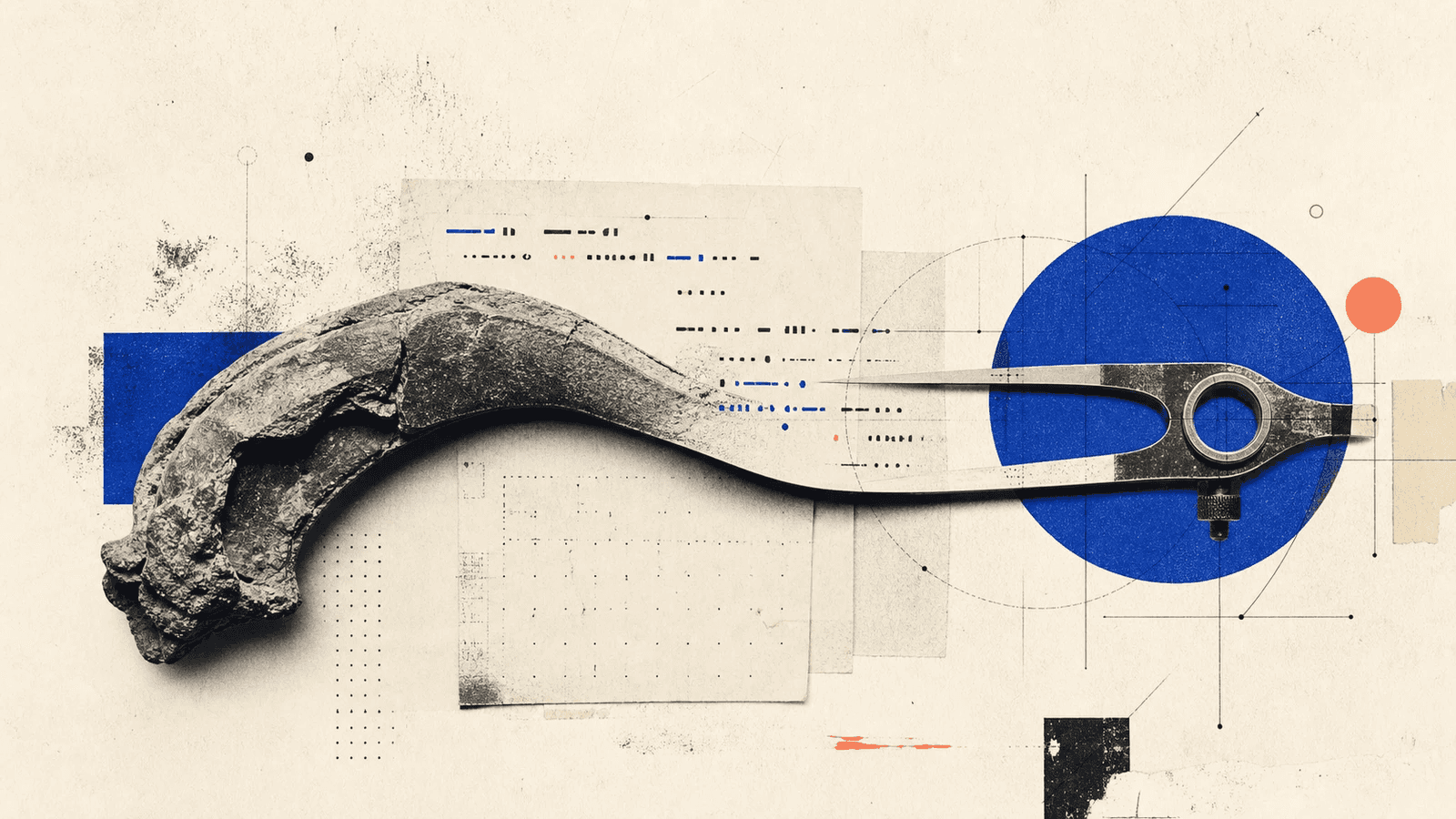
AI coding assistants do not make software craft worthless. They change where the most valuable craft sits: less in possessing every individual line, and more in understanding the problem, architecting the solution, guiding the tool, integrating its output, and validating the result.
The claw
There is a moment in Jurassic Park that has stayed with me. Dr. Alan Grant, an experienced paleontologist, carries a fossilised Velociraptor claw. It is a prized object and a symbol of the expertise he has built by studying creatures that disappeared long ago.
By the end of the film, Grant has encountered living dinosaurs. The claw has not become false or meaningless, but its place in his world has changed. Faced with the living thing, he lets the fossil go. When he is asked what comes next, his answer is that he will have to evolve too.
Code as the treasured object
For years, developers could relate to that claw. We wrote algorithms carefully, polished functions, guarded codebases, and treated clean, efficient code as evidence of mastery. There was genuine craft in the work, and there still is.
Then AI coding assistants arrived. They can produce boilerplate, suggest improvements, and refactor code while we work. Tasks that once occupied hours can sometimes be completed in minutes. Producing a function is increasingly less likely to be the hardest part of the job.
Where the craft moves
The durable skill now lies in what surrounds generated code. A developer must still decide what problem is worth solving, choose an architecture, provide useful direction, integrate pieces into a coherent system, and test whether the result is actually correct.
This is not an argument to stop caring about code quality. It is an argument to stop confusing the artefact with the full discipline. The fossil claw had its time and retained its meaning; the world around it simply moved forward. Software development is moving too, and our sense of mastery needs to evolve with it.
This essay was first published on LinkedIn on 4 March 2025. The original publication also links to the film scene that inspired it.